
YDTech® manufacture of snow hardmetal studded tires! supplier of tungsten ice spikes, ice screws or snow studs for shoes, bicycles, cars in china!
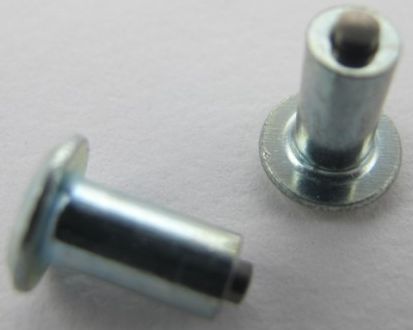
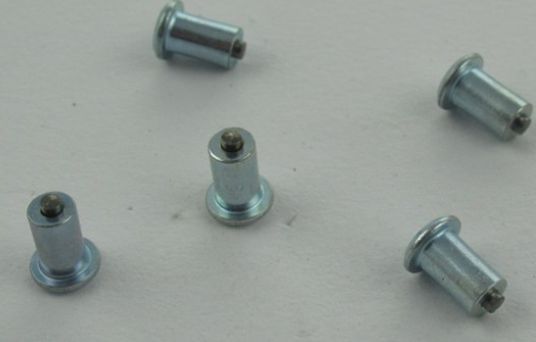
What's winter spikes?
The new tire studs can be easily installed and removed without professional installation tools. It can also be disassembled according to the season, when not being used the snow tire studs could be removed lightly and stored for use again in the following season. Choose appropriate size of new studs in the installation process in terms of the depth of tire thread.
studded tires do increase tire-pavement friction on icy roads but they also may reduce tire-pavement friction on non-icy roads and they definitely do increase pavement wear. A typical passenger car produces negligible pavement damage and can thus be ignored in pavement structural design. However, the same typical passenger car equipped with studded tires becomes a significant pavement damage concern and must be accounted for through use restrictions, maintenance costs and mix design
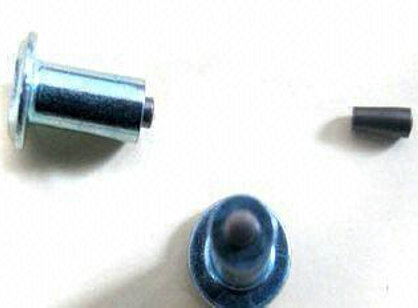
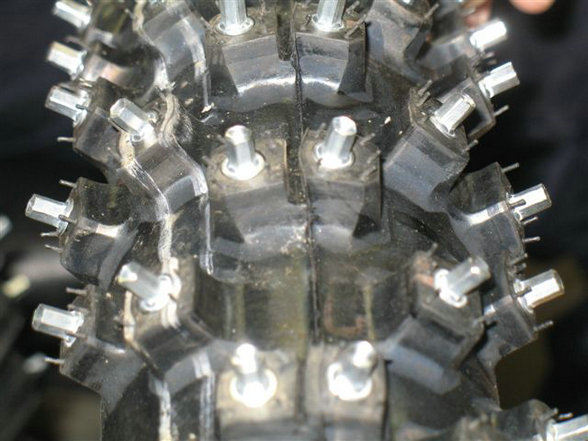
Carbide studs, the primary working parts of tire studs, is one of our main export products. Being assembled with the outer shell of tire studs, which can be fixed to the surface of tire as a whole for antiskid effect. Through nearly four years of exploration and experience accumulation, production technology and quality control measures of our company have been fully mature. Now our company has a highly automated production capacity, the monthly output can reach up to 1060 million grain/mont.
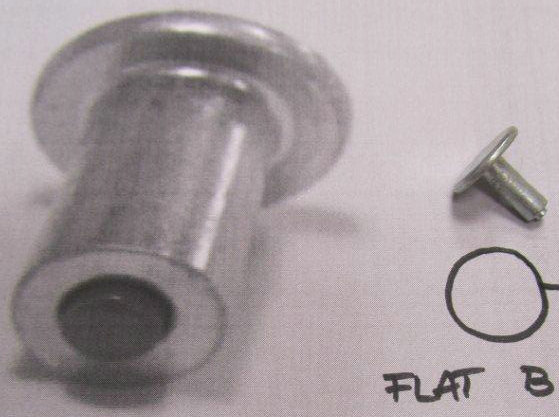
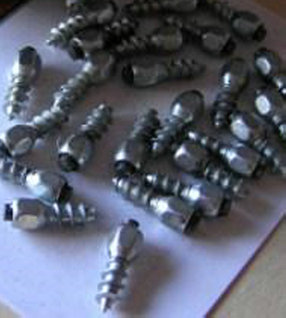
sizes of snow tire studs with hard metal tungsten carbide
| 1 | length | 10mm, 11mm, 12mm, 13mm, 15mm | ||||||||
| 2 | head diameter | 8.8mm , 8mm | ||||||||
| 3 | shaft diameter | 4.8mm, 5.2mm | ||||||||
| 4 | weight(g) | 2.02, 2.03, 2.19, 2.44, 1.7, 1.8 | ||||||||
| 5 | color | sliver, gold, blue | ||||||||
| 6 | surface | zinc coated | ||||||||
| total | 6 info of ice studs, tire studs, snow studs,winter studs | |||||||||
|---|---|---|---|---|---|---|---|---|---|---|
History of tire studs
They can also prevent the car from hydroplaning, which happens when there is an even layer of water on the road and the tires slide over it rather than make a path through it. Studded snow tires combine elements of snow chains without the bulk or damage to the asphalt.
Equivalent Grade WC of now studs,winter studs, ice traction
| Grade | Equivalent Grade | ISO | Hardness(HRA) | Density(g/cm3) | Bending strength(N/mm3) | |||||
| HF10 | YG6X | K01-K015 | 93.0 | 14.8 | 2500 | |||||
| HF15 | YG8X | K15-K30 | 91.5 | 14.6 | 2500 | |||||
| HF20 | YG10X | K15-K30 | 91.0 | 14.4 | 3000 | |||||
| HF30 | YG13X | K15-K30 | 90.0 | 14.0 | 3000 | |||||
| HF10.1 | YG6A | K10 | 92.0 | 14.8 | 1500 | |||||
| HF10.2 | YG6X | K10 | 91.5 | 14.8 | 1600 | |||||
| HF20.1 | YG6 | K10-K20 | 90.5 | 14.8 | 1700 | |||||
| HF20.2 | YG6 | K10-K20 | 90.0 | 14.8 | 2000 | |||||
| HF30.1 | YG8 | K30 | 90.0 | 14.7 | 1800 | |||||
| HF30.2 | YG8 | K30 | 89.5 | 14.7 | 1800 | |||||
| HF30.3 | YG8 | K30 | 89.0 | 14.7 | 1800 | |||||
| HF40.1 | YG11 | K40 | 88.5 | 14.3 | 2500 | |||||
| HF45.1 | YG15 | -- | 87.0 | 14.0 | 2500 | |||||
| HF50.1 | YG20 | -- | 86.0 | 13.5 | 2500 | |||||
| HF30.4 | YG8C | -- | 88.0 | 14.7 | 2300 | |||||
| HF30.5 | YG9C | -- | 87.0 | 14.6 | 2400 | |||||
| HF40.2 | YG11C | -- | 86.5 | 14.3 | 2500 | |||||
| HF40.3 | YG13C | -- | 86.0 | 14.2 | 2500 | |||||
| HF45.2 | YG15C | -- | 85.0 | 14.0 | 2500 | |||||
| HF50.2 | YG20C | -- | 84.0 | 13.5 | 2500 | |||||
| HF10 | YT15 | P10 | 92.0 | 11.2 | 1350 | |||||
| HF20 | YT14 | P20 | 91.0 | 11.4 | 1400 | |||||
| HF30 | YT5 | P30 | 89.5 | 12.9 | 1700 | |||||
| HF10 | YW1 | M10 | 92.0 | 13.4 | 1400 | |||||
| HF20 | YW2 | M20 | 91.0 | 13.2 | 1600 tfoot> | |||||
| Total | 36 WC now studs,winter studs, ice traction | |||||||||
|---|---|---|---|---|---|---|---|---|---|---|
Studded tires have been around in one form or another since about 1890. Modern studded tires first took off in popularity in the 1950s in Scandinavia where they were used to increase traction on icy roads. Studded tires then took hold in the U.S. in the 1960s and enjoyed growing popularity into the 1970s. The 1970s saw the first significant research efforts aimed at assessing their safety and pavement wear effects. The late 1970s through the 1990s produced technical improvements in studded tires as well as widespread governmental restrictions on their use in an effort to limit pavement wear.