
YDTech® manufacturer of hoof nails,hoof nipper, horseshoe nails; Supplier of concave toe, horseshoe saddlery, harness horse in china.
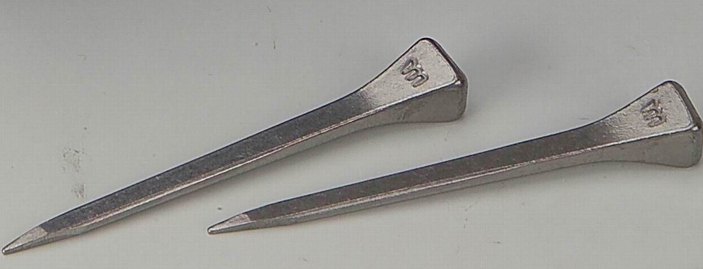
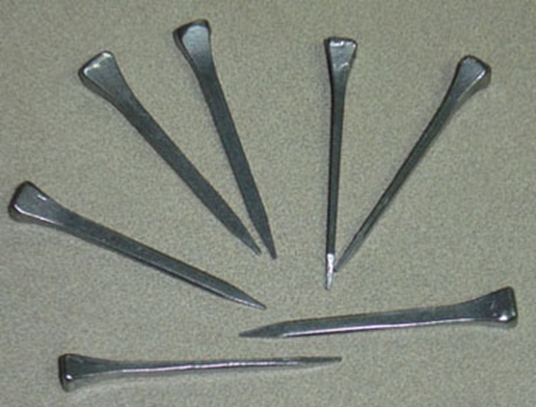
our horseshoe nails are manufactured to the highest quality standard in the industry, with a production tolerance of only 0.05mm. horseshoe nails are strong, with a precisely formed head and tapered shank. Specially shaped angles at the nail point ensure ultimate control when nailing. horseshoe two way cooperation with farriers from all over the world, in combination with advanced research and manufacturing know how, provide the best possible horseshoe nail in the industry.
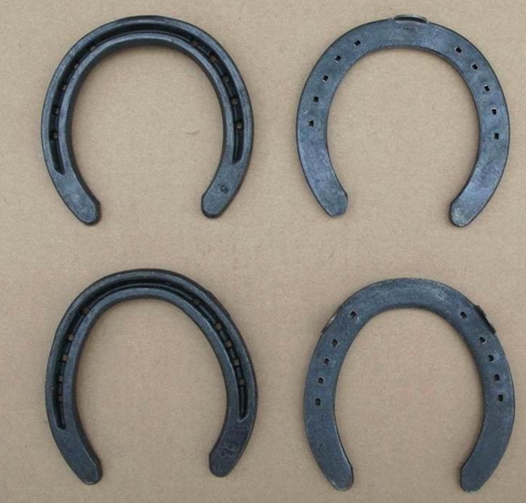
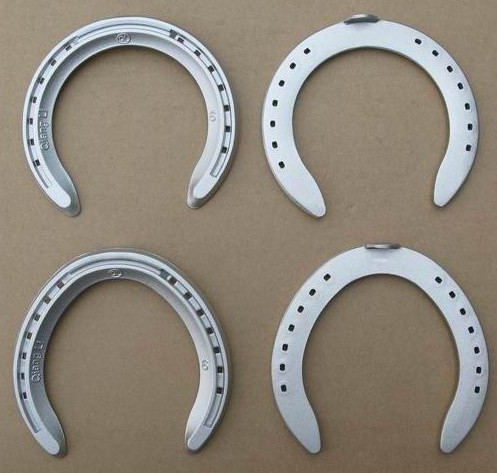
The specific anatomy of a horse’s foot and the principles of shoeing and, in particular, of the fixation of the shoe using nails can strongly influence the horse’s comfort and thus his locomotion. The position of the nails is therefore just as important as the prescription of a certain type of horseshoe. During his discussion with the farrier, the veterinarian will have to take this into account in his prescription of a horseshoe for horses that are clinically or subclinically lame.
The nail is thicker at the edge and the point is bevelled. It is interesting to compare these nails with surgical suture needles. They have a special point for each anatomic structure and a profile that allows the nail to be driven into the structure without the use of force and in a direction determined by the surgeon. The farrier and the surgeon thus have the same objectives: driving the nail in with great precision and with the least possible damage to the anatomic structure.
allows the nail to be driven into the structure without the use of force and in a direction determined by the surgeon. The farrier and the surgeon thus have the same objectives: driving the nail in with great precision and with the least possible damage to the anatomic structure.
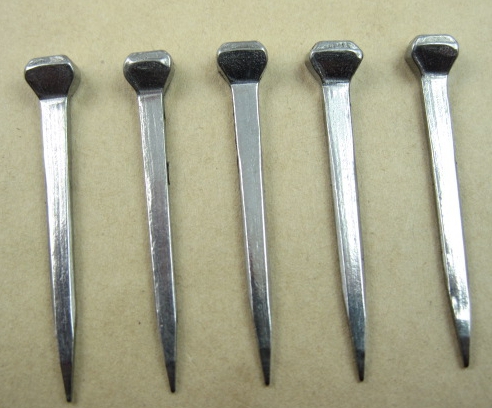
Horseshoe nails consist of a head, a neck, a shank and a point. French horseshoe nails have a square head in the form of two frusta whose bases are positioned against each other. The lower frustum forms the neck, which is as long as the horseshoe is thick and thus defines the size of the horseshoe nail. The crown is the upper part of the head and is perpendicular to the shank. The shank follows the neck. It has a flat and a hollow side with smoothed edges in the form of the hoof. The edges are smoothed to prevent the hoof wall from crumbling when the nail is driven into the hoof.