
manufacturer of compensating driving pins on FSB face drivers for face clamping,turning, milling! supplier of custon floating face drive pins on FSB workholding forhard turning, drilling, grinding.
FSB-Type Face Drivers: A Perfect Example. FSB-type face drivers are designed around precisely this principle. Their floating drive pins achieve: Automatic compensation for end-face runout and irregularity. Uniform locking under tailstock thrust. Deviation compensation while maintaining a fixed machining datum. Balanced force distribution across all drive pins.
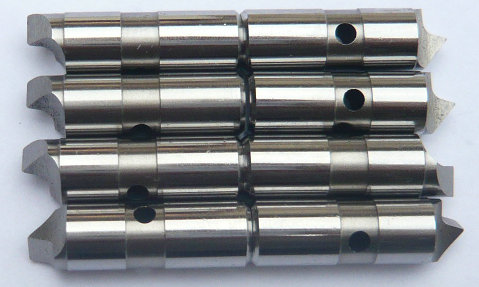
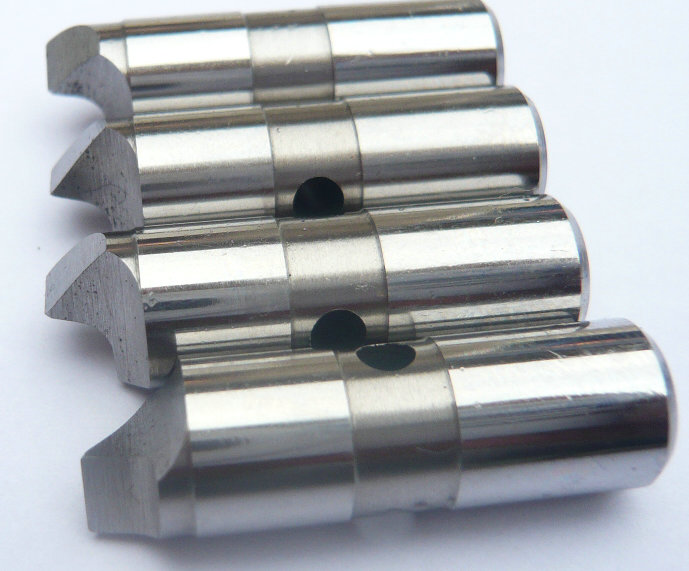
In modern high-precision turning and grinding, face drivers have replaced chucks and lathe dogs for one-hit complete machining. At the heart of every high-performance face driver lies the drive pin system. Among all designs, floating drive pins represent the most advanced solution for handling real-world workpiece irregularities.
Unlike rigid drive pins, floating drive pins have independent axial floating capability. When a workpiece end face is uneven or exhibits runout, each floating drive pin automatically adjusts its position. Under tailstock thrust pressure, every pin moves individually to compensate for end-face irregularities. The result is a uniform clamping force distributed across all pins, ensuring that no single pin is overloaded while others remain loose.
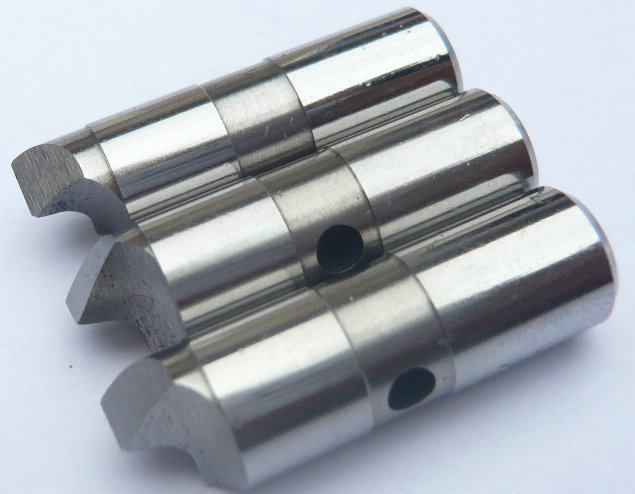
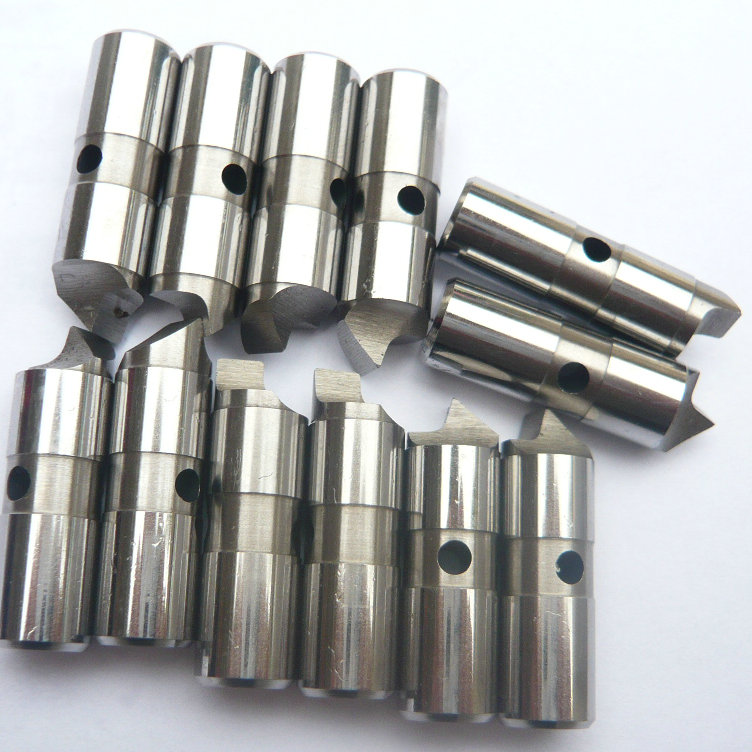
When an FSB face driver engages a casting, forging, or saw-cut blank, its floating pins instantly accommodate surface variations up to several millimeters. The workpiece is gripped securely without slipping, yet without inducing bending stress. Machining accuracy improves, tool life extends, and scrap rates drop significantly.
This independent axial movement is critical. As the tailstock advances, the thrust force acts equally on each floating pin. Those encountering a high spot retract slightly; those encountering a low spot extend further. The entire system self-equalizes. This creates a constant, stable datum for the entire machining process—regardless of how rough or inconsistent the raw workpiece end face may be.
- home
- products
- contact
- equipments
- face driver pins
- offset driving parts
- half offset drive pins
- central driver parts
- standard/ Fixed driving pins
- Lowered drive parts
- clockwise driver pins
- counterclockwise driving parts
- full width drive pins
- life driver parts
- chisel-edged driving pins
- floating drive parts
- power-operated driver pins
- hydraulic driving parts
- mechanical drive pins
- SB driver parts
- FFB driving pins
- carbide driver pins
- tool steel S7 driving parts
- changeable pins