
manufacturer of 4-Pin System: rounded-end Lowered drive pins of Mechanical face drivers! supplier of 4-Pin System: Right-hand(RH) face drivers and Left-hand(LH) Lowered rounded-end drive pins.
Lowered face driving pins are a functional variant of standard drive pins, specifically engineered for face drivers used on workpieces with small diameters.
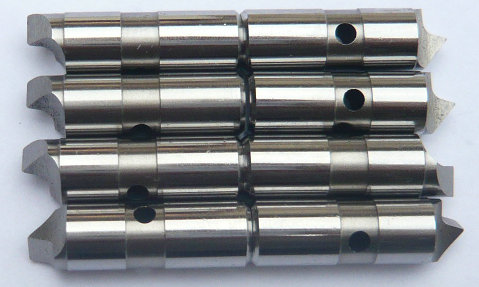
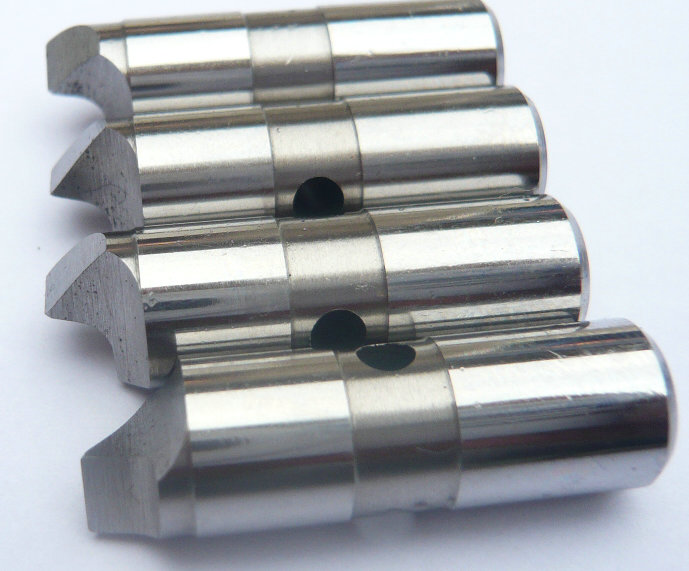
Key Distinction: "Lowered" does not refer to a reduction in pin height, but rather a smaller gripping (driving) diameter achieved through modified pin geometry or positioning.
Primary Purpose: When the standard drive pins cannot effectively contact the workpiece face due to insufficient diameter, lowered pins provide a solution by reducing the effective gripping diameter.
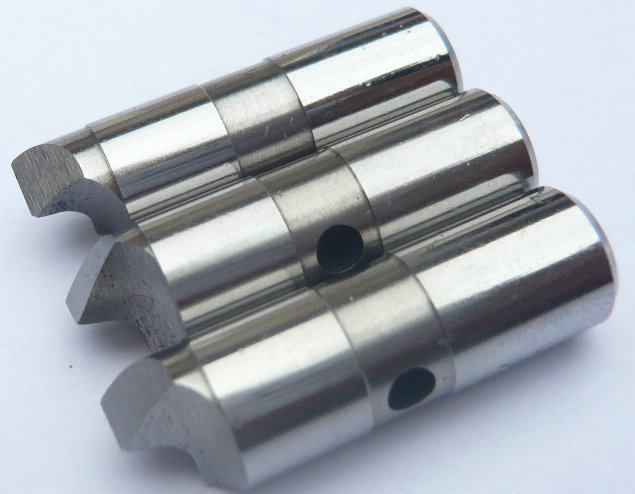
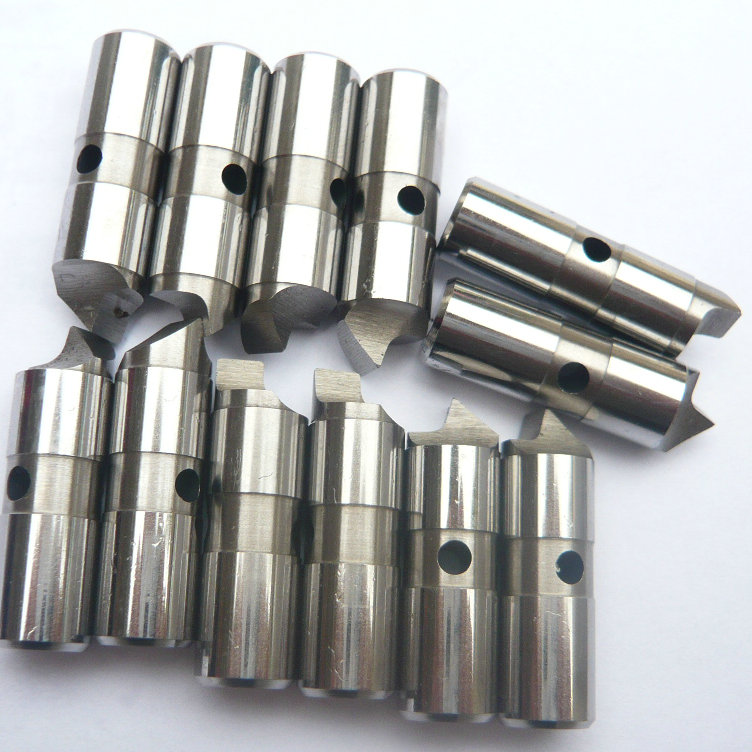
Not a separate product line: Lowered pins are retrofit components — they replace standard pins on the same face driver body, expanding the driver's application range without requiring a new tool.
Typical scenarios: Machining small-diameter shafts, studs, or pins Workpieces where the available face contact area is limited
Standard face driver drive pins vs. Lowered face driver drive pins
| Dimension | Standard Pins | Lowered Pins | |||||||||
|---|---|---|---|---|---|---|---|---|---|---|---|
| Primary use, | General turning, all diameters | Small-diameter workpieces only | |||||||||
| Gripping circle | Factory default | Reduced | |||||||||
| Torque capacity | Full | Reduced (proportional to radius) | |||||||||
| Tail geometry | Rounded | Rounded (identical) | |||||||||
| Material | Vanadium-Molybdenum steel | Vanadium-Molybdenum steel | |||||||||
| Pin count | 4 per driver | 4 per driver | |||||||||
| Replacement | Direct | Direct (no driver teardown) | |||||||||
| When to select | Most applications | When standard pins cannot reach face | |||||||||
Applications where the workpiece has a recessed center or step preventing standard pin contact Limitation to consider: Because the driving force is applied at a smaller radius (reduced lever arm), the torque transmission capacity is proportionally reduced. For extremely heavy roughing cuts on small diameters, this is usually acceptable because the small workpiece itself cannot absorb high torque.
- home
- products
- contact
- equipments
- face driver pins
- offset driving parts
- half offset drive pins
- central driver parts
- standard/ Fixed driving pins
- Lowered drive parts
- clockwise driver pins
- counterclockwise driving parts
- full width drive pins
- life driver parts
- chisel-edged driving pins
- floating drive parts
- power-operated driver pins
- hydraulic driving parts
- mechanical drive pins
- SB driver parts
- FFB driving pins
- carbide driver pins
- tool steel S7 driving parts
- changeable pins