
YDTech® manufacturer of Tool Steel S7 driving pins for face clamping,turning, milling! supplier of custon Tool Steel S7 face drive pins on workholding for drilling, grinding.
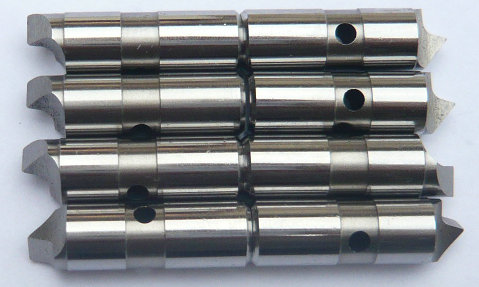
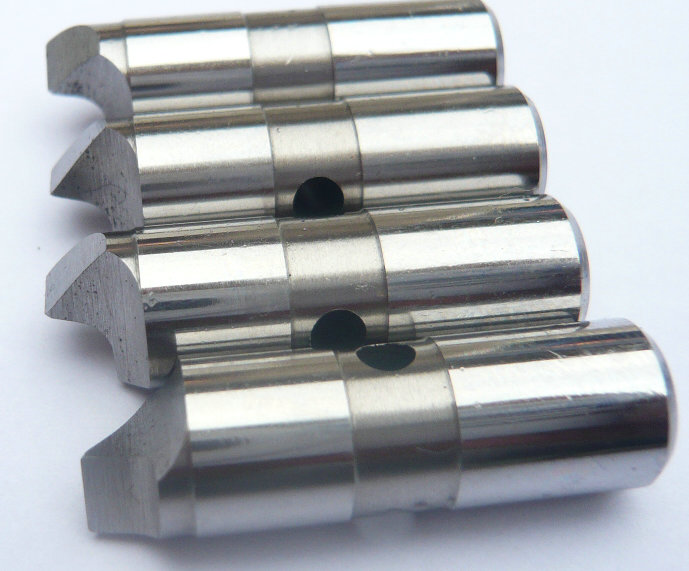
In the world of precision machining, the performance of a face driver ultimately depends on the quality of its drive pins. These small components bear the full brunt of torque transmission, impact loading, and cyclic stress. Selecting the right material is therefore not a minor detail but a critical engineering decision. Among all available tool steels, AISI S7 tool steel stands out as the ideal choice for drive pins.
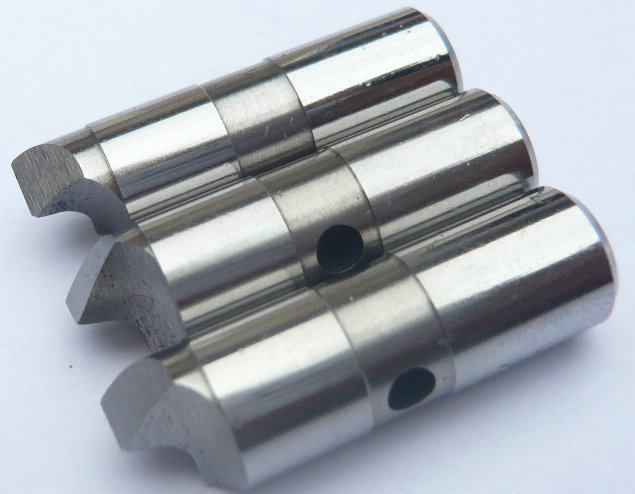
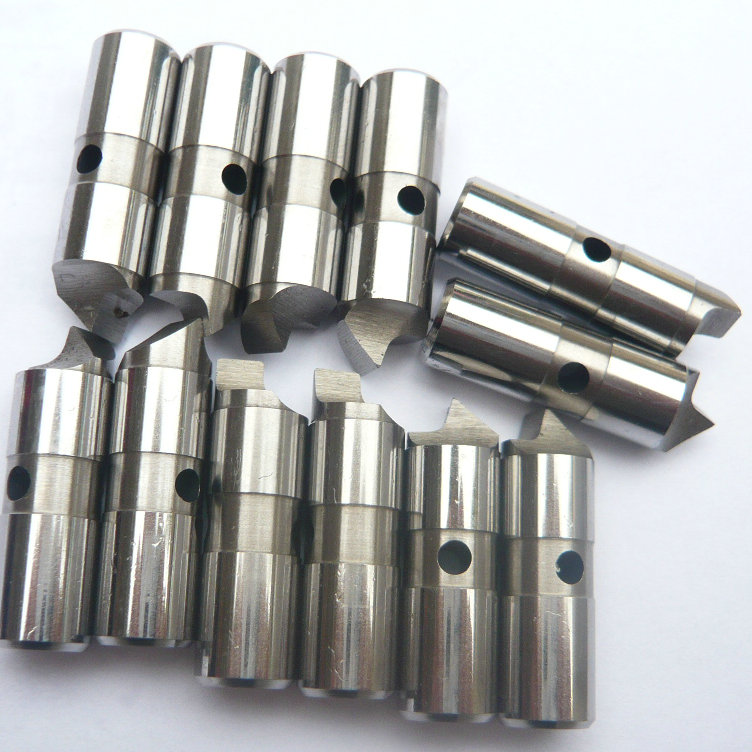
S7 is classified within the S-series of shock‑resisting tool steels, specifically engineered to withstand high-impact and shock loading conditions. Drive pins experience repeated, high-velocity strikes as they bite into workpiece end faces under tailstock pressure. S7's ability to absorb and redistribute shock energy prevents micro‑cracking and catastrophic failure, ensuring drive pins perform reliably under the toughest cutting conditions. With a Charpy impact energy of approximately 125 ft-lbs, S7 offers roughly three times the impact toughness of conventional cold-work steels such as A2.
the comparison between S7 and other common steels for drive pins.
| Material , | MComparison | ||||||||||
|---|---|---|---|---|---|---|---|---|---|---|---|
| S7 vs. 4140 Alloy Steel | S7 is a professional choice for impact resistance, superior to 4140. 4140 is suitable for general-purpose components with lower toughness requirements and is lower in cost. | ||||||||||
| S7 vs. D2/A2 Tool Steel | S7 trades some wear resistance for superior toughness, making it far superior to D2 and A2, which are wear-resistant but more brittle. | ||||||||||
| S7 vs. M2 High-Speed Steel | S7 is suitable for impact‑dominated applications where cutting heat is not extreme. M2 has better “red hardness” than S7, but its toughness is inferior to S7. | ||||||||||
| S7 vs. Cemented Carbide | cemented carbide offers high hardness and good wear resistance, but has low flexural strength and high brittleness – poor impact resistance. When workpiece hardness exceeds 48 HRC, using coated or diamond‑tipped drive pins is recommended. | ||||||||||
Toughness is often sacrificed in pursuit of hardness, but S7 maintains a unique balance. Its carbon content of approximately 0.50% produces a martensitic structure that is both strong and ductile. This allows drive pins to undergo microscopic elastic deformation under load rather than chipping or fracturing. In cold heading, heavy stamping, and hard turning applications, S7's exceptional toughness directly translates to longer pin life and fewer unplanned tooling changes
While S7 is not a high-chrome wear steel like D2, it offers moderate abrasive wear resistance combined with high hardness. Heat-treated S7 achieves a working hardness of 54–58 HRC, with some grades reaching up to 60 HRC. This hardness, together with its inherent toughness, provides the wear surface needed to resist galling and deformation over thousands of machining cycles.
S7 is an air-hardening tool steel, which means it hardens uniformly when cooled in still air. This property minimizes distortion during heat treatment, a critical advantage for precision components like drive pins that must maintain tight geometric tolerances. S7 also exhibits good through‑hardening properties, ensuring consistent hardness from surface to core, even in relatively small cross-sections.
S7 tool steel machines readily in the annealed condition and responds well to conventional heat treatment processes, including tempering and optional cryogenic treatment for enhanced wear resistance. S7 is already widely used for heavy‑impact tools such as punches, shear blades, chisels, and cold forming dies [. Drive pins manufactured from S7 share the same proven reliability.
- home
- products
- contact
- equipments
- face driver pins
- offset driving parts
- half offset drive pins
- central driver parts
- standard/ Fixed driving pins
- Lowered drive parts
- clockwise driver pins
- counterclockwise driving parts
- full width drive pins
- life driver parts
- chisel-edged driving pins
- floating drive parts
- power-operated driver pins
- hydraulic driving parts
- mechanical drive pins
- SB driver parts
- FFB driving pins
- carbide driver pins
- tool steel S7 driving parts
- changeable pins