
The Precision vs. The Power: Center Pin and Drive Pin in Face Drivers.
in modern CNC machining, the face driver has become an essential workholding solution for turning operations. Unlike a traditional chuck, which grips the outer diameter of a workpiece, a face driver uses two distinct types of components to locate and rotate a shaft: the Center Pin and the Drive Pins. Although they work together within the same tool, their functions, precision requirements, and wear characteristics are fundamentally different. Simply put, the center pin is responsible for accuracy, while the drive pins are responsible for power.
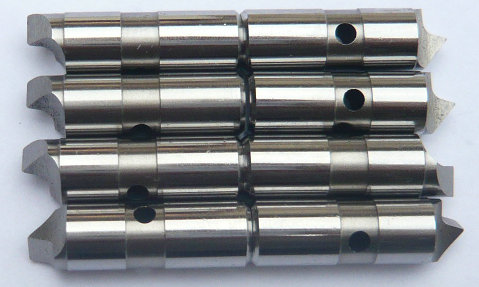
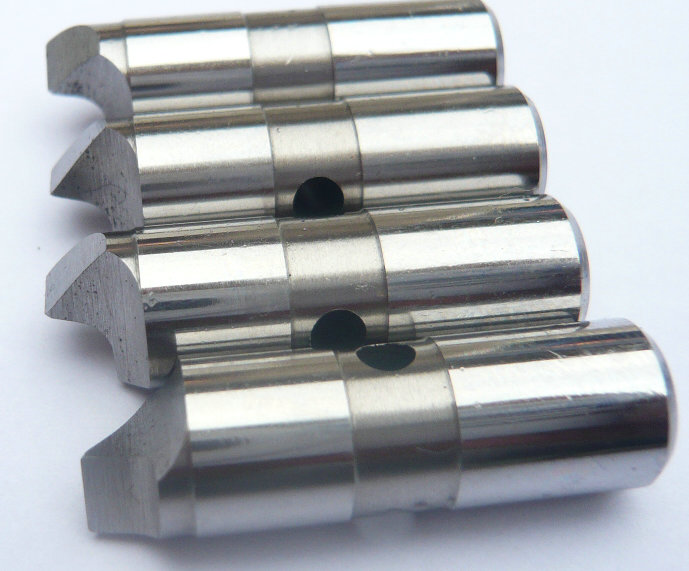
The Center Pin (also known as the center point or dead center) is located at the rotational axis of the face driver. Its primary role is geometric positioning. As the tailstock advances the workpiece, the center pin engages the pre-machined center hole on the part's end face. This single point of contact establishes the exact axis of rotation for the entire machining process. Consequently, the center pin demands an extremely high level of precision—typically within 0.002mm to 0.005mm of concentricity. Any runout or wear on its 60-degree conical surface will directly transfer to the workpiece, causing issues such as part runout, taper, or ovality during subsequent cuts. The center pin is the "master reference" that defines where the part is located in space.
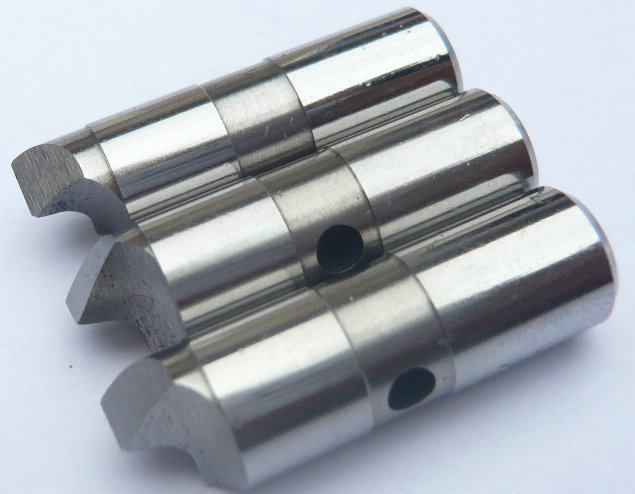
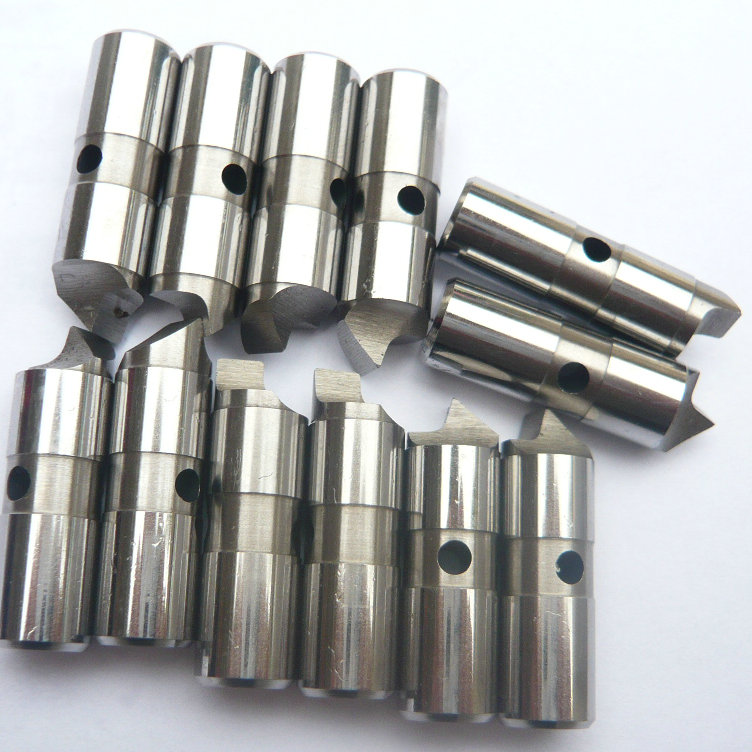
In contrast, the Drive Pins are arranged in a circular pattern around the center pin. Their function is torque transmission. Typically made from solid carbide or CBN, these pins have sharp, serrated tips that physically bite into the flat end face of the workpiece. Once the center pin establishes the axis, the drive pins engage the end face to transfer the spindle's rotational force to the part. The precision requirement for drive pins is focused on consistency rather than absolute positioning. The most critical factor is that all drive pins must lie in the same axial plane to ensure even clamping force distribution. Minor variations in their radial position are acceptable because the center pin—not the drive pins—dictates the rotational axis.
Parameter of face drive Drive Pins and lathe Center Pins
| Parameter | Center Pin | Drive Pin | |||||||||
|---|---|---|---|---|---|---|---|---|---|---|---|
| Primary Function | Workpiece positioning | Torque transmission | |||||||||
| Location | Central axis | Circular around center | |||||||||
| Contact Point | Center hole (60° cone) | Flat end face | |||||||||
| Precision Level | Extremely high (um) | Moderate (consistency) | |||||||||
| Concentricity Requirement | ≤.002 - 0.005 mm | Not critical | |||||||||
| Height Consistency | N/A (single point) | All pins co-planar (≤ 0.01mm) | |||||||||
| Load Type | Radial + axial | Shear + axial | |||||||||
| Material | Hardened steel | Carbide, Stainless steel | |||||||||
| Wear Effect | Runout / ovality | Slippage / chatter | |||||||||
| Failure Consequence | Loss of accuracy | Loss of drive power | |||||||||
| Replaceable | Yes | Yes | |||||||||
| Typical Lifespan | Long (if lubricated) | Short (consumable) | |||||||||
The differences between the two become starkly evident when examining wear or failure modes. If a center pin becomes worn—developing grooves or a flat spot on its cone—the result is an immediate and direct degradation of machining accuracy. The workpiece will wobble or cut out of round. Conversely, when drive pins wear down and their teeth become blunt, the initial symptom is typically slippage, vibration, or unusual noises during heavy cuts. Interestingly, the machining accuracy may remain acceptable even with worn drive pins as long as the center pin remains intact and the part does not slip.
the Center Pin and Drive Pins play complementary but distinct roles. The center pin is the precision component; its condition and accuracy determine how straight and round the final product will be. The drive pins are the power component; their sharpness and consistency determine how securely the workpiece is driven. For a machinist, understanding this difference is crucial for troubleshooting: if your parts are losing concentricity, inspect the center pin; if the driver is chattering or slipping under load, inspect the drive pins. Both are essential, but for very different reasons
- home
- products
- contact
- equipments
- face driver pins
- drivers vs pins
- S7 drive pins
- lathe drive pins
- mechanical drive pins
- hardened drive pins
- CNC face drivers
- drive fixture pins
- changeable driving pins
- face driver parts
- drive pins
- face drives
- drive chuck
- hardened pins
- drive shafts
- center pins
- drive claws
- drive grips
- drive chuck
- driver tops
- locating pins
- driving pins
- cylindrical rollers
- needle rollers
- dowel pins
- capillary tubes